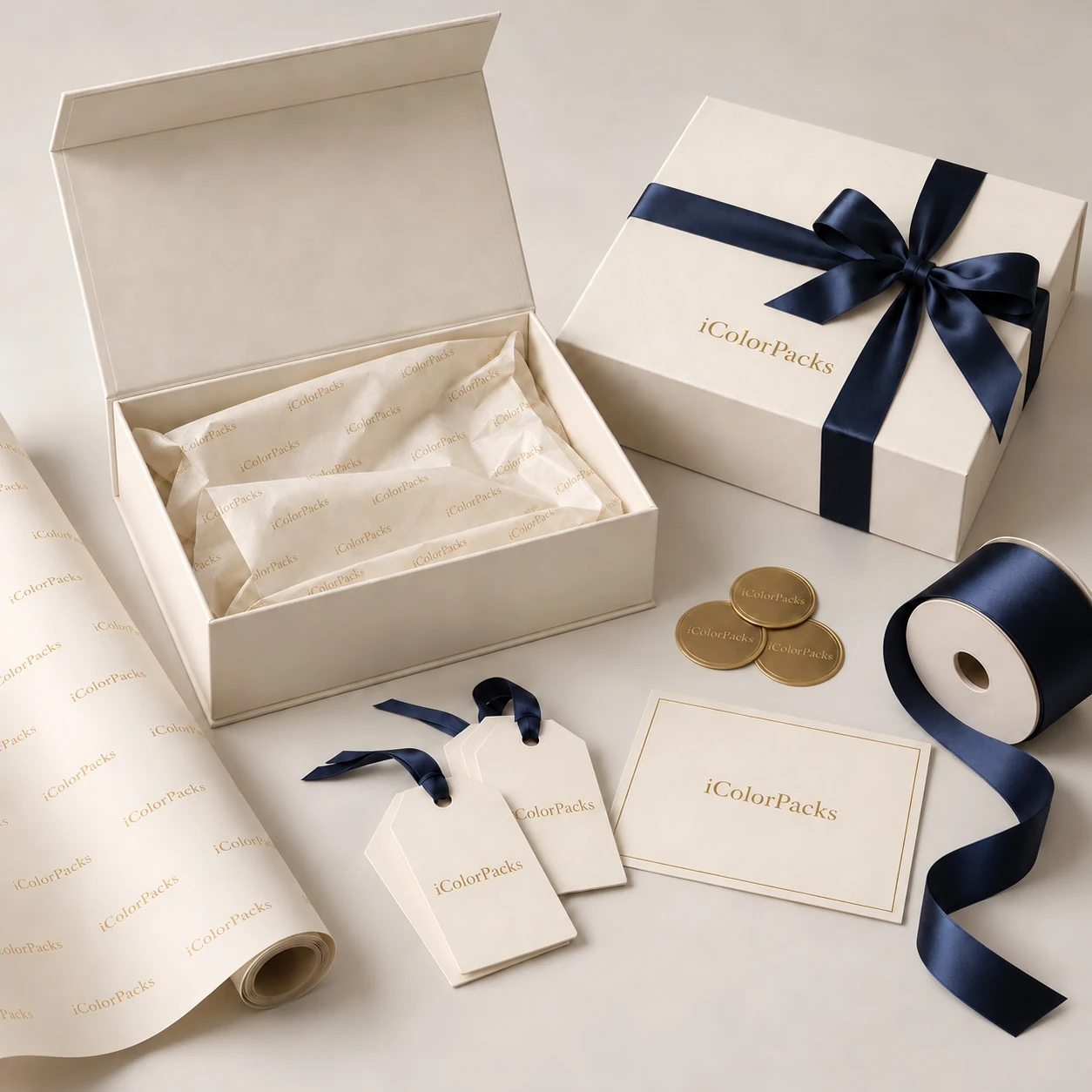
Buying answer: Define what goes into one finished gift, then multiply every component by the number of gifts. Ask for each component, sampling, assembly and freight to be priced separately. A “100-set” quote is incomplete until both sides agree what a set includes.
Start with a simple unboxing sequence
First-run packaging discussions on Reddit compare custom boxes with simpler branding through tissue, labels or tape. The practical lesson is to decide which components perform a job. A seal can hold tissue closed; a card can carry the gift message; an insert can locate a product. Adding a second component with the same job may create cost and packing work without improving the presentation.
Sketch the opening sequence: remove ribbon, open lid, read card, release seal, unfold tissue and lift the product. Check that the customer can reach the product without damaging it.
Write a bill of materials
| Component | Per gift | Planned total | Specification to confirm |
|---|---|---|---|
| Gift box | 1 | 100 | Internal size, structure, wrap and logo |
| Tissue sheets | 2 | 200 | Sheet dimensions, paper and logo repeat |
| Seal sticker | 1 | 100 | Size, shape, finish and adhesion |
| Ribbon length | 1 | 100 cut lengths | Width, length, material and tie method |
| Hang tag | 1 | 100 | Dimensions, hole, artwork and cord |
| Message card | 1 | 100 | Size, sides printed and writing space |
These quantities show consumption only. Accessory minimums, packing quantities, spare allowance and production quantities must be confirmed separately. Custom boxes at iColorPacks start at 100 pieces per size and artwork; do not assume each accessory can be manufactured at exactly the consumption quantity.
Sample the interaction between components
- Fit the actual product, insert and folded tissue inside the closed box.
- Check whether a repeated tissue logo remains visible after folding.
- Test seal adhesion on the chosen tissue and whether opening tears it in the intended way.
- Tie a bow on a physical sample to establish the ribbon cut length; box dimensions alone are not enough.
- Check that the card sits flat without blocking closure or covering the intended reveal.
- Compare box, ribbon and foil colors together under consistent lighting.
Tissue used for presentation should not be assumed to provide a moisture barrier or food-contact suitability. Identify any separate functional requirement before selecting the material.
Loose components or assembled kits?
Loose supply gives your fulfillment team control over folding and placement, but it adds labor and requires clear component counts. Pre-assembled kits can reduce local work, yet bows and formed boxes may increase shipment volume or need extra protection. Confirm whether “assembled” includes only forming the box or also installing inserts, folding tissue and attaching tags.
Ask for a packing photo or approved pack-out description, units per carton, carton dimensions, gross weight and labels. Products to be packed are not assumed to be included in a packaging supply order.
Compare the complete quotation
Request separate costs for boxes, each accessory, artwork/tooling, custom samples, kitting and delivery. Identify any surplus accessories and where they will be stored for reorders. Agree payment terms and production approvals in writing. Sampling, production and transit are separate schedule items.
If budget is tight, compare a box plus tissue and seal against the complete set. Retain the components that improve protection, usability or the gift message. A shorter component list can also make the first packing trial easier.
Send a brief that can be quoted
Share the gift contents, internal box size, quantity per artwork, required components and counts, logo files, color references, loose/kitted preference, destination and arrival date. Use our Custom Gift Packaging Sets page to select accessories, or compare foldable versus assembled box supply before deciding how the kits should arrive.
Request a specification-based quote
Send dimensions, quantity, artwork and destination. Samples, production and freight are confirmed for your project.
Discuss this guide with Jennifer · Send a packaging inquiry