Why there is no responsible universal price
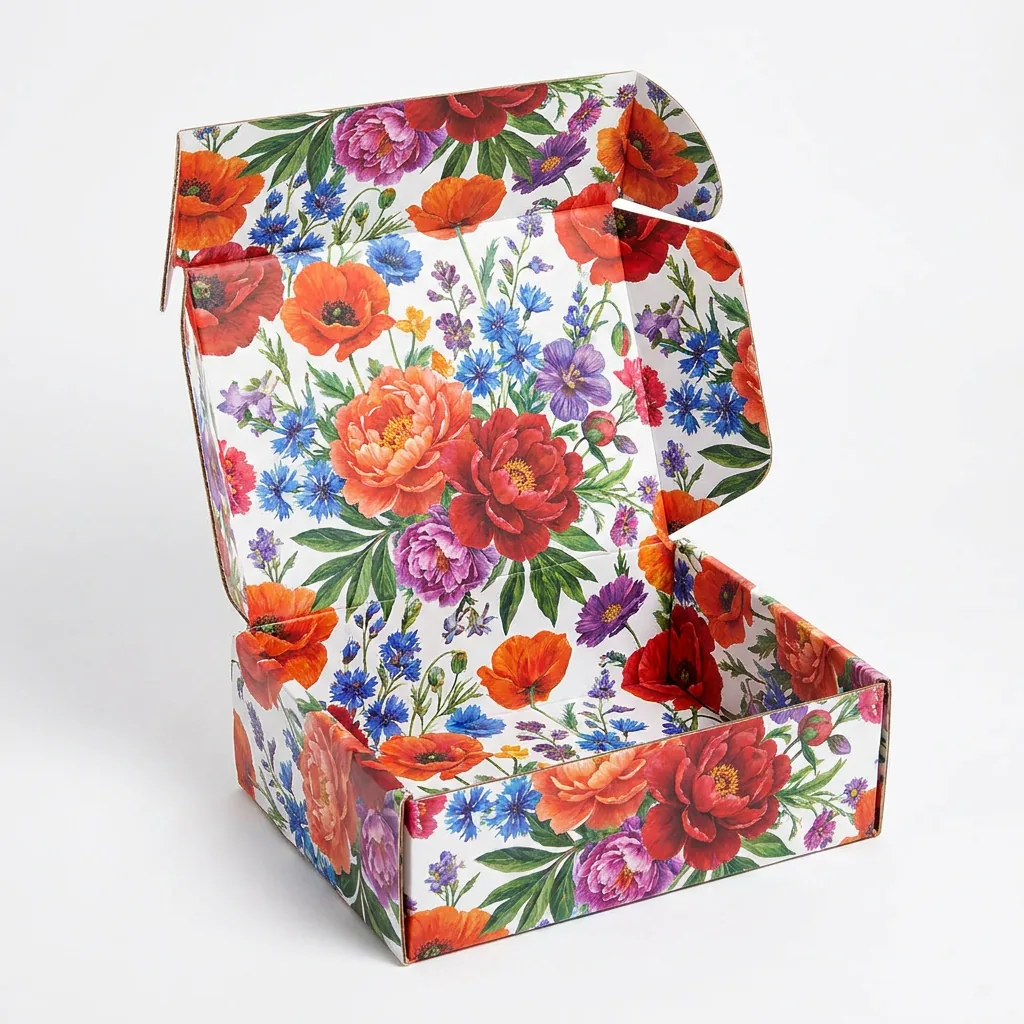
A colored mailer box is not a single standardized product. Two boxes with the same outside dimensions can use different flute profiles, liner papers, print coverage, coatings, inserts and packing methods. Those decisions change board consumption, press setup, finishing steps, waste allowance, carton volume and freight.
For that reason, a price advertised without dimensions, quantity, artwork and delivery destination is only a rough reference. The useful number is the price for the same specification and trade term—not simply the lowest unit price shown in a list.
Seven cost drivers buyers should confirm
- Finished and internal size. Internal clearance must allow for the product, protective wrap and insert. Larger blank size increases board and freight volume.
- Board and flute. Paper grade, recycled content, flute profile and total construction influence appearance, compression and cost.
- Print method and coverage. A one-color mark is different from full-coverage graphics. Quantity and color expectations help determine the suitable process.
- Surface protection. Varnish, lamination and specialty finishes add steps and should be selected for handling conditions, not decoration alone.
- Insert and closure. Product fit, locking tabs, tear strips and adhesive options change tooling and assembly.
- Order mix. One design in one size is more efficient than the same total quantity split across several designs or sizes.
- Packing and delivery. Flat packing, carton dimensions, pallet requirements and destination can materially change landed cost.
What determines MOQ?
Minimum order quantity is normally driven by the production route and setup required for your specification. Printing plates, cutting dies, board preparation and finishing all have setup costs. Splitting an order into several artworks can create several effective production runs even when the combined quantity looks large.
Instead of asking only “What is your MOQ?”, provide quantity per size and per artwork. A supplier can then confirm whether designs can share a die, whether a digital sample is appropriate and which specification creates the most efficient production plan.
How to compare two quotations
| Check | What must match | Common source of confusion |
|---|---|---|
| Box size | Internal or external dimensions and measurement order | Suppliers quote different size bases |
| Material | Liner paper, flute and construction | “Corrugated board” is too broad |
| Printing | Process, colors and coverage | Prototype appearance differs from production route |
| Finish | Coating or lamination and special effects | Optional finish omitted from one quote |
| Packing | Units per carton, pallet and flat/assembled state | Freight volume is not comparable |
| Delivery | Incoterm, destination and included charges | EXW compared with delivered pricing |
Information that produces a faster, clearer quote
Use sampling to control risk
A sample is an approval tool, not only a visual mockup. Check product fit, closure, board feel, graphics, scuff resistance, assembly sequence and packing efficiency. If a sample uses a different print route from bulk production, ask the supplier to identify the expected differences.
iColorPacks can review a free-sample route after receiving your product size, quantity, artwork status and destination. Confirm any courier arrangement and what the sample is intended to approve before shipment.
Request a specification-based mailer box quote
Send your size, quantity, artwork and delivery destination. We reply within two hours with the next specification questions needed for a useful quotation.